
The landscape of global energy markets hangs in the balance as President Donald Trump concludes a White House Situation Room meeting without announcing a final decision on a proposed deal to pause the three-month-old Iran war. A potential 60-day memorandum of understanding could temporarily ease tensions, but maritime analysts and commodity strategists warn the geopolitical impact may already be permanent.
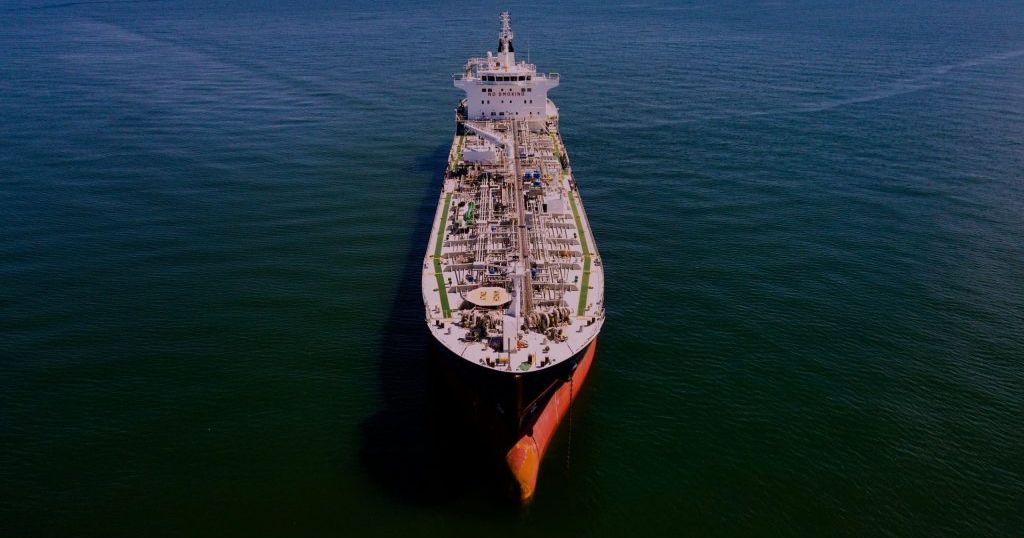
Even if diplomatic negotiations restore basic passage, oil tanker traffic through the Strait of Hormuz may never return to prewar volumes. Structural changes, lingering security risks, and a reshaped regulatory environment are expected to redefine Persian Gulf shipping for years.
Trump-Iran Ceasefire Talks and Gulf Shipping Conditions
The push for a ceasefire has exposed deep gaps between Washington’s demands and Tehran’s position.
On Truth Social, President Trump outlined key conditions for approving a pause:
- Unrestricted Shipping Access: The Strait of Hormuz must open to all commercial vessels without maritime tolls.
- Nuclear Disarmament: Iran must permanently renounce nuclear weapons, and enriched material must be destroyed under coordination with the U.S. and the International Atomic Energy Agency (IAEA).
- Sanctions and Blockades: The U.S. naval blockade in the Gulf of Oman would be lifted, but “no money will be exchanged, until further notice.”
Oil prices fell following signs of progress, but Iranian state media quickly disputed the framework.
The state-aligned Fars news agency argued that Trump’s statements do not reflect the draft agreement. According to Iranian sources, the deal focuses instead on the release of $12 billion in frozen Iranian assets, with no provisions for toll-free transit or immediate destruction of nuclear material.
A White House official confirmed that negotiators have developed a preliminary framework: a 60-day window would lift the U.S. naval blockade in exchange for Iran removing defensive mines within 30 days, while broader issues would be negotiated during the ceasefire.
Why Strait of Hormuz Shipping Faces Structural Risk
Even if a political deal is reached, convincing commercial shipowners to return to the Persian Gulf remains a separate challenge.
Before the war following joint U.S. and Israeli military operations, navigation through the Strait of Hormuz was largely taken for granted. Today, the oil market faces a fragmented and risk-sensitive shipping environment.
Industry estimates suggest that if Iran retains operational influence over the waterway, long-term traffic could stabilize at just 60% to 70% of prewar volumes, according to Lloyd’s List.
For operators, the risk is twofold: physical security threats linked to the Islamic Revolutionary Guard Corps, and potential U.S. sanctions exposure if coordination with Iranian authorities violates regulations.
As a result, access to the strait is increasingly shaped by political alignment rather than neutral commercial rules.
Lessons from the Red Sea Disruption
Recent events in the Red Sea highlight how long maritime disruptions can persist.
After Iran-aligned Houthi militants hijacked a cargo ship, daily traffic through the Bab el-Mandeb Strait dropped from 75 ships to 31 vessels within weeks. Even after maritime attacks ceased in recent months, traffic has still not returned to previous levels.
The key takeaway is clear: chokepoints do not need active conflict to remain disrupted. Once shipping routes, insurance models, and logistics chains adjust, recovery can be slow or incomplete.
For Hormuz, risks include unexploded naval mines, renewed escalation, and the possibility of broader conflict within twelve months if long-term agreements on Iran’s missile program are not reached.
Alternative Energy Routes and Infrastructure Response
The Strait of Hormuz differs from the Red Sea in one critical way: there is no viable detour.
The strait historically handles about 20% of global liquefied natural gas (LNG) and crude oil flows, making it one of the world’s most important energy chokepoints.
To reduce exposure, regional producers are expanding alternative infrastructure. Saudi Arabia and the UAE have optimized pipeline systems to redirect millions of barrels per day to export terminals on the Red Sea and the Gulf of Oman. The UAE is also developing a secondary bypass pipeline expected to come online next year.
However, these alternatives cannot fully replace the strait’s capacity. LNG exports remain dependent on specialized maritime transport, and several industrial commodities face similar constraints.
Long-Term Outlook for Global Energy Markets
The strategic importance of the Strait of Hormuz is unlikely to disappear, but its role in global energy logistics is evolving.
As U.S. Energy Secretary Chris Wright noted, a full maritime blockade is a geopolitical tool that can realistically be used only once.
While Middle Eastern energy remains central to global supply, the systems transporting it are diversifying. Shippers, energy firms, and governments are actively redesigning supply chains for a world where the most critical energy chokepoint can no longer be considered stable or guaranteed.