
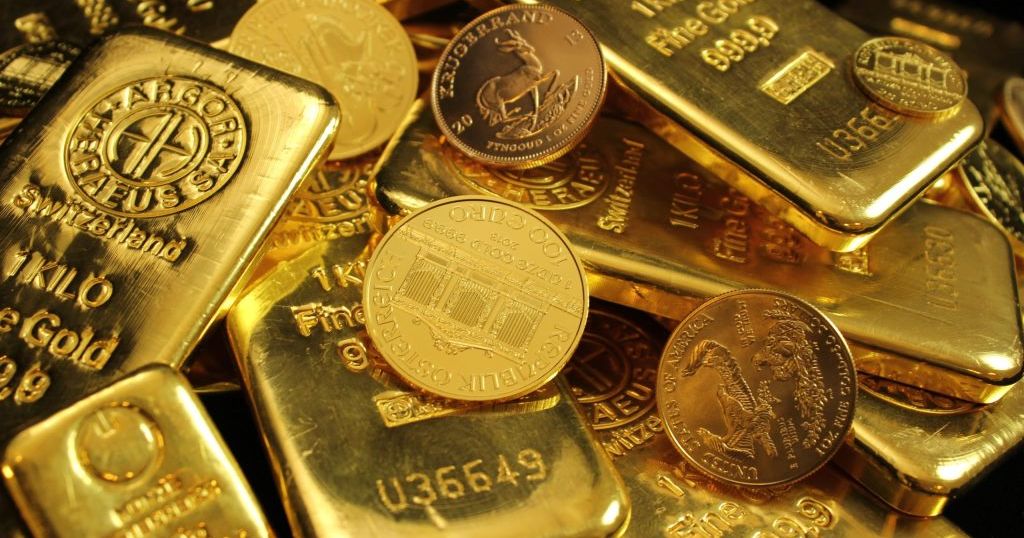
Precious metals are entering a critical phase after one of the strongest rallies in recent years. Following explosive gains in 2025 – with gold rising 66% and silver surging 135% – both metals are now facing mounting pressure from a stronger U.S. dollar, rising bond yields, and escalating geopolitical tensions.
While gold has fallen to a two-month low, silver is struggling with growing demand destruction and extreme volatility, raising questions about whether the precious metals boom can continue through 2026.
Gold and Silver Prices Face a Crucial Turning Point in 2026
Gold Hits Two-Month Low as U.S. Dollar Strengthens
Gold prices dropped sharply on Thursday, hitting their lowest levels since March 26. Spot gold fell around 1.5% to trade near $4,388.32 per ounce, while front-month U.S. gold futures settled at $4,381.50.
The sell-off comes as uncertainty surrounding the ongoing U.S.-Iran war continues to grow. With hopes for a quick peace agreement fading, the effective closure of the Strait of Hormuz – one of the world’s most important oil shipping routes – has kept crude prices elevated and boosted demand for the U.S. dollar.
A stronger dollar also tends to pressure precious metals by making them more expensive for overseas buyers.
At the same time, rising interest rate expectations are weakening gold’s appeal as an inflation hedge.
“Investors are concerned that the Iran war is dragging on and that inflation is only going one way: up,” said Michael Field, chief equity strategist at Morningstar. “Although traditionally gold and other precious metals are seen as an inflation hedge, they do not pay an income. With interest rates likely to climb and inflation high, investors are more comforted by assets that generate yield.”
Government bond yields across the U.S., Europe, and Japan also moved higher on Thursday as inflation concerns intensified. Investors are now focused on the upcoming U.S. Personal Consumption Expenditures (PCE) price index – the Federal Reserve’s preferred inflation measure – which economists expect to rise 3.8% year-over-year.
Silver Prices Struggle Amid Industrial Demand Weakness
While gold faces macroeconomic pressure, silver is dealing with an additional problem: weakening industrial demand.
After rallying more than 140% last year and briefly surging above $120 per ounce on January 28 before suffering a massive 30% single-day crash, silver is now experiencing signs of demand erosion.
Unlike gold, silver has significant industrial exposure and is widely used in electronics, automotive manufacturing, computers, mobile phones, and solar panels. That makes the metal far more sensitive to economic slowdowns and shifts in manufacturing activity.
According to UBS analysts, elevated silver prices are discouraging industrial buyers.
“The demand erosion is likely to persist as long as prices remain at current levels,” UBS said. “Unlike gold, which benefits from robust central bank buying, silver lacks this strategic demand anchor.”
Spot silver fell 3.7% on Thursday to around $72.13 per ounce, while front-month U.S. silver futures settled near $72.16. Although prices have recovered from the 2026 low of $67.60 reached on March 20, volatility remains extremely high.
Platinum and Palladium Extend the Precious Metals Sell-Off
The broader Platinum Group Metals (PGM) market also moved lower.
- Spot platinum declined 1.9% to $1,882.21 per ounce.
- Palladium dropped 3.1% to $1,347.99 per ounce.
Daniel Hynes, senior commodities analyst at ANZ, said renewed Middle East tensions continue to complicate the global inflation outlook and reinforce expectations that central banks may keep interest rates elevated for longer.
Gold Price Forecast for 2026
Despite the recent correction, several major financial institutions remain bullish on gold’s medium-term outlook.
UBS recently lowered its year-end gold target to $5,500 per ounce from $5,900 but still expects strong support from central bank demand, reserve diversification, and rising global debt levels.
Bank of America also remains optimistic, forecasting gold could reach $5,093 per ounce by year-end before easing toward $4,925 by the end of 2027. BofA strategists describe gold as “overbought, but underinvested,” arguing that broader macroeconomic instability and unconventional U.S. economic policies could continue supporting prices.
Meanwhile, analysts at Kepler Cheuvreux have reportedly increased exposure to gold, citing its strong relationship with rising oil prices.
Silver Price Prediction: Limited Upside Ahead?
Analysts remain significantly more cautious on silver.
HSBC expects the gold-to-silver ratio to widen, suggesting that even if gold resumes its rally later this year, silver may continue to underperform.
Macquarie analysts also see limited room for a strong recovery. While they expect silver prices to stabilize around current levels in the near term, they warn that downside risks could intensify if global economic conditions weaken further or if the Federal Reserve proceeds with additional interest rate hikes in early 2027.
Until geopolitical tensions in the Middle East ease and inflation pressures stabilize, extreme volatility is likely to remain a defining feature of the precious metals market.